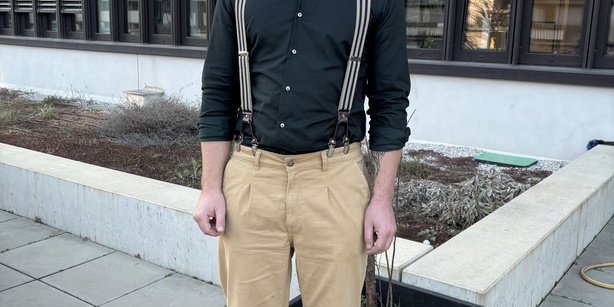
Congratulations Matthias Meschik, MSc!
Congratulations to Matthias Meschik, who successfully defended his MSc thesis on Mar 05th, 2026.
Centre for Microbiology and Environmental Systems Science
The Division of Terrestrial Ecosystem Research | TER at the Centre for Microbiology and Environmental Systems Science | CeMESS aims to advance the fundamental understanding of how soil microorganisms and plants respond to and in turn shape their abiotic and biotic environment, and what consequences these interactions have for the functioning of the Earth’s ecosystems.
Researchers at TER address pressing environmental issues, such as the impact of climate change on ecosystem functioning and the role of soils in the global carbon cycle and in food security.
Congratulations to Matthias Meschik, who successfully defended his MSc thesis on Mar 05th, 2026.
Almost all plants live in close symbiosis with so-called mycorrhizal fungi – an important symbiosis for absorbing essential nutrients. In their new…
The new CeMESS Scientific Advisory Board (SAB) paid its inaugural visit to the Centre. An All Hands Meeting introduced CeMESS, and over two days…
Congratulations to Yujia Luo, who received a highly competitive Marie Skłodowska-Curie Postdoctoral Fellowship for her project “Tracing microbial…
Congratulations to Hélène Peter, who successfully defended her MSc thesis on Dec 15th, 2025.
Her thesis on “Measuring soil Enzyme Activity in situ…
Research for sustainable solutions: Focus on the biodegradation of water-soluble polymers
Luo, Y., Cardoso, MF. S., Halfwerk, R., Sechi, V., Wanek, W., & Buisman, C. J. N. (2026). Distinct and synergistic roles of bacteria, fungi, and extracellular polymeric substances in soil aggregation. Soil Biology and Biochemistry, 222, 1-4. Article 110274. https://doi.org/10.1016/j.soilbio.2026.110274
Glasl, B., Kitzinger, K., Luter, H. M., Legin, A., Schuster, S., Salas, E., Heldwein, N., Damjanovic, K., Rutsch, M., Vekeman, B., Geerlings, N. M. J., Pjevac, P., Séneca, J., Watzka, M., Wanek, W., Speth, D. R., & Wagner, M. (2026). Branched-chain amino acid assimilation enables mixotrophy of ammonia-oxidizing archaeal sponge symbionts. Science Advances, 12(36), 1-15. Article eaef9450. https://doi.org/10.1126/sciadv.aef9450
Lintner, M., Polovodova Asteman, I., Bernhard, J. M., Legin, A., Schintlmeister, A., Cyran, N., Schmidt, K., Wanek, W., Golen, J., & Tyszka, J. (2026). Water soluble fuel compounds impair metabolism in benthic foraminifera: Ecotoxicological observations at cellular level. Science of the Total Environment, 1045, 1-10. Article 181976. https://doi.org/10.1016/j.scitotenv.2026.181976
Yao, R., Zhang, Y., Wanek, W., Luo, Z., Fu, H., Chang, S. X., Terrer, C., Jiang, M., Ge, T., Liang, G., Yang, Y., Luo, Y., Chen, J., Delgado-Baquerizo, M., Chadwick, D. R., Jones, D. L., Wu, L., Liang, Y., & Ma, Q. (2026). Synergistic Interactions Between Warming and Elevated Atmospheric CO2 Increase Soil Organic Carbon Sequestration. Global Change Biology, 32(8), 1-14. Article e71072. https://doi.org/10.1111/gcb.71072
Sun, L., Chen, J., Qiao, Y., Moorhead, D. L., Wanek, W., Ochoa-Hueso, R., & Lin, Y. (2026). Revisiting ecoenzymatic stoichiometry models for improved understanding of microbial resource limitations. Soil Biology and Biochemistry, 222, 1-10. Article 110280. Advance online publication. https://doi.org/10.1016/j.soilbio.2026.110280
University of Vienna